
Top Rated Overseas Insurance for Students Studying Abroad
Why Overseas Insurance for Students Is Essential Before You Fly
Overseas insurance for students is specialized coverage that protects you from medical bills, trip disruptions, and other unexpected costs while studying in another country. Here are the top plan types worth comparing:
| Plan Category | Starting Price | Best For |
|---|---|---|
| Basic Student Plan | $29/month | F1/J1/OPT students |
| Global Visa Plan | $39/month | 185+ countries, visa compliance |
| Standard Abroad | $34/month | US students studying abroad |
| Comprehensive Protection | $56/month | Maximum medical protection |
| Budget Secure | ~$0.85/day | Budget-conscious students |
Your US health insurance almost certainly won’t cover you overseas. If something goes wrong — a broken leg in Bangkok, a stolen laptop in Berlin, a flight cancelled due to illness — you’re paying out of pocket without the right plan.
That’s a serious financial risk for students already stretching every dollar.
The good news: quality coverage is more affordable than most students expect. Plans start well under $50 a month, and over 2 million students have already found options that fit their budget and visa requirements.
Whether you’re on an F1 visa, a J1 exchange program, finishing OPT, or studying abroad for a semester, there’s a plan built specifically for your situation. More than 200 nationalities are covered by leading providers, and many plans deliver instant insurance documents you can submit directly to your school.
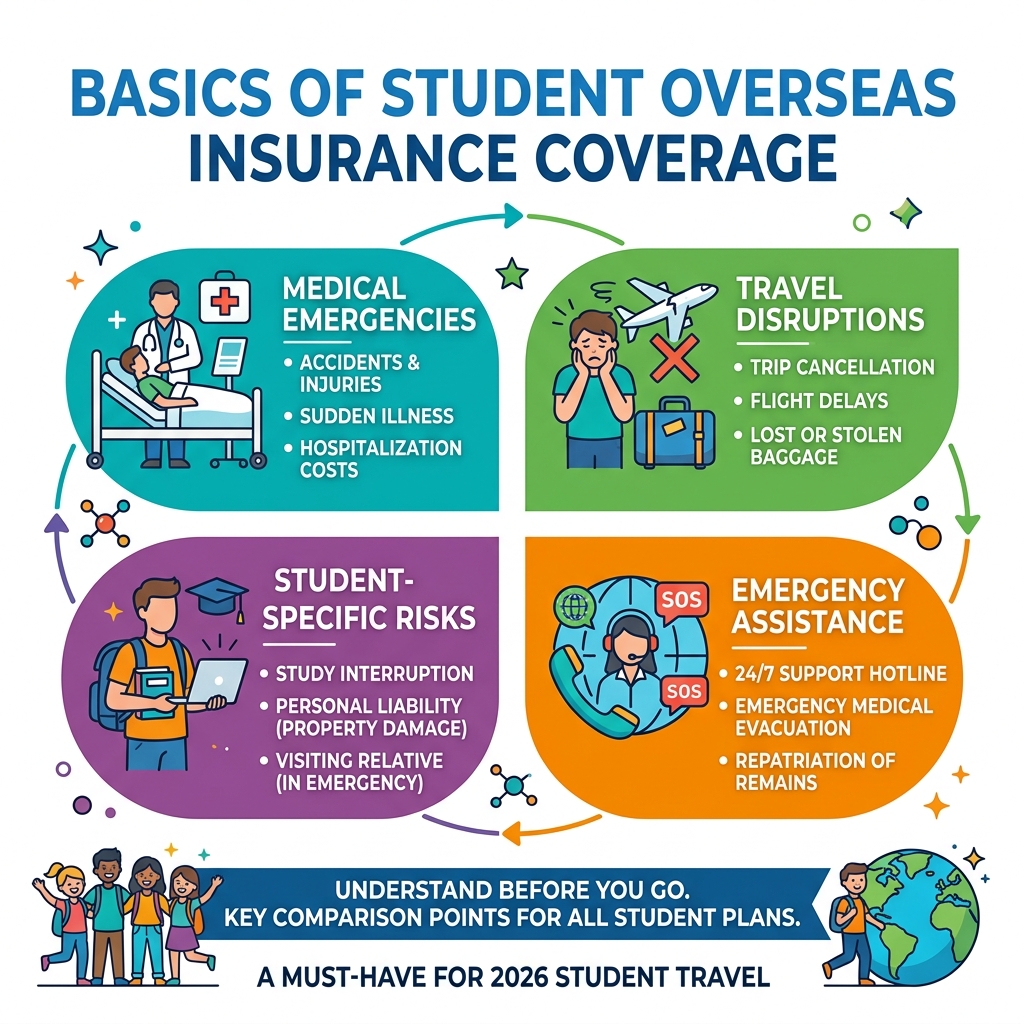
Basic overseas insurance for students glossary:
- health insurance for medical students
- medical aid plans for students
- medical indemnity insurance for medical students
Comparing Plan Types for International Education

When we look at overseas insurance for students, it’s easy to get overwhelmed by the jargon. Are you looking for travel insurance, health insurance, or a “study abroad plan”? While they sound similar, they serve very different masters.
Standard travel insurance is usually a short-term fix. It’s great for a spring break trip because it focuses heavily on trip cancellation and lost luggage. However, if you are spending a full semester or a year in a foreign country, you need something more robust. International student health insurance is designed for the long haul, offering comprehensive medical benefits that mirror what you’d expect from a traditional domestic plan, but with the added perks of global travel protection.
Key Differences in Coverage Scope
The “scope” of your plan determines whether you’re covered for a simple flu shot or a $50,000 emergency air-ambulance ride. Most student-specific plans include:
- Medical Evacuation: If the local clinic in a remote village can’t treat you, this pays to fly you to the nearest adequate hospital.
- Repatriation: In the saddest of circumstances, this covers the cost of returning remains to your home country.
- Trip Interruption: If a family emergency forces you to fly home early, this helps recoup those non-refundable tuition or travel costs.
Understanding these nuances is the first step in A Student’s Guide to Health Insurance That Doesn’t Hurt. For many, the goal is simply How to Not Go Broke Studying Abroad with Overseas Medical Insurance, which requires balancing high medical limits with manageable premiums.
Specialized Plans for F1 and J1 Visas
If you’re heading to the United States, the government has some very specific thoughts on your insurance. For J1 visa holders (exchange visitors), the U.S. Department of State mandates minimum coverage levels, including at least $100,000 in medical benefits per accident or illness and a deductible that doesn’t exceed $500.
F1 students usually have their requirements set by their specific university. We often see plans that cater specifically to these visa types, ensuring that the policy won’t just protect your health, but also your legal status. Many of these providers also offer dependent coverage for F2 or J2 visa holders, so your spouse or children aren’t left unprotected.
What Does Overseas Insurance for Students Cover?
A solid overseas insurance for students policy is like a Swiss Army knife. It’s not just about hospital stays. Modern plans often include:
- Emergency Medical: Coverage for new illnesses and unexpected injuries.
- Mental Health: Studying abroad is stressful. Many top-rated plans now include outpatient mental health visits and crisis support.
- Telehealth Services: Why sit in a waiting room when you can talk to a doctor via a mobile app from your dorm room?
- 24/7 Assistance: Multilingual support teams that can help you find a local doctor or replace a lost passport.
It’s also worth noting that for tax purposes, international students on F, J, M, or Q visas are often considered non-resident aliens and may be eligible for the IRS international student exemption regarding certain domestic insurance mandates for their first five years in the U.S.
Choosing the Right Overseas Insurance for Students by Destination
Your destination dictates your risk. If you’re doing a multi-country “gap year” through Europe, you need a plan with a wide geographic zone. If you’re specifically bound for the States, you’ll need a plan that navigates the complex U.S. healthcare network.
We recommend checking if your provider has a “direct billing” agreement with hospitals in your destination. This means the insurance company pays the hospital directly, so you don’t have to cough up thousands of dollars upfront and wait months for reimbursement. If you are U.S.-bound, you should Protect Your Study Abroad with the Best Student Travel Insurance to USA by choosing a plan with a large PPO network.
Affordable Overseas Insurance for Students Under $50 per Month
Budget is usually the biggest hurdle for students. However, because students are generally young and healthy, premiums are surprisingly low. We have seen comprehensive plans starting as low as $29 per month.
Even specialized plans for OPT (Optional Practical Training) graduates, who are no longer on campus but still under their student visa, are affordable, often starting around $39 per month. By choosing a “Budget” or “Smart” tier, you can keep your costs low while still meeting the legal requirements for your visa. For more tips on saving money, check out The Ultimate Guide to Cheap and Reliable Student Travel Insurance.
Navigating Visa and University Requirements
Most universities won’t let you register for classes until you prove you’re insured. They often push their own “school plan,” which can cost $2,000 to $4,000 a year. But here’s a pro tip: many schools allow you to “waive” their expensive plan if you buy an outside policy that meets their standards.
Meeting the J1 Insurance Standards
To satisfy the U.S. government for a J1 visa, your plan must be underwritten by a company with a solid financial rating (like an A.M. Best rating of “A-” or above). It must cover:
- $100,000 in medical benefits.
- $50,000 for medical evacuation.
- $25,000 for repatriation of remains.
- A deductible not exceeding $500 per accident or illness.
How to Secure a School Insurance Waiver
Securing a waiver is usually a digital process. Once you purchase your overseas insurance for students, the provider often gives you an “instant ID card” and a “waiver form” via email. You then submit these to your school’s international student office. Some providers even offer a “waiver approval guarantee”—if the school rejects the plan, they’ll give you a full refund.
Before you buy, make sure you understand Everything You Need to Know About the Exclude USA Student Policy if you are studying anywhere other than the United States, as these plans are often much cheaper.
Exclusions and the Claims Process
No insurance policy covers everything. If you decide to go skydiving while under the influence of local spirits, don’t expect the insurance company to pay for the resulting cast.
Understanding Policy Limitations
Common exclusions include:
- Pre-existing Conditions: Many budget plans won’t cover chronic issues you had before the policy started, though some “Elite” plans offer waivers after a waiting period.
- Adventure Sports: High-risk activities like mountain climbing or bungee jumping often require a special “rider” or add-on.
- Preventative Care: Many student plans focus on new injuries and illnesses, meaning routine check-ups or vaccinations might not be covered.
- High-Risk Areas: Trips to countries under a U.S. State Department level 4 travel advisory are often excluded from coverage.
It’s vital that you Don’t Get Schooled by the 5-Star Student Policies—read the fine print so you aren’t surprised by an exclusion later.
Filing a Claim for Reimbursement
If you do need to use your insurance, the process is becoming increasingly digital. Many modern providers have “Easy Claim” apps. You simply take a photo of your itemized receipt and medical report, upload it through the app, and wait for processing.
While some claims can take weeks, “fast-track” providers are now offering 48-hour approvals for simple claims, with reimbursements sent directly to your bank account or even digital wallets like Apple Pay.
Frequently Asked Questions about Student Coverage
How much does student travel insurance typically cost?
For a healthy student under 25, you can find basic medical-only plans for about $1 per day. Comprehensive plans that meet university waiver requirements typically range from $30 to $100 per month, depending on the level of coverage and the country of study.
Can I get insurance if I am already abroad?
Yes, many providers allow you to purchase coverage even if you’ve already left your home country. However, be aware that there is often a “waiting period” (usually 24-48 hours) before the coverage becomes active to prevent people from buying insurance only after they get sick.
Does student insurance cover COVID-19 and pandemics?
Most modern overseas insurance for students now treats COVID-19 like any other illness. This means if you contract the virus while abroad, your medical treatment, testing, and even emergency evacuation (if medically necessary) are covered under the standard terms of the policy.
Conclusion
At ACT Unis, we know that studying abroad is a once-in-a-lifetime opportunity. It’s a time for growth, adventure, and learning—not for worrying about how you’ll pay for a trip to the emergency room. By taking the time to compare overseas insurance for students, you aren’t just checking a box for your visa; you’re securing global peace of mind.
Whether you need a budget-friendly plan for a summer internship or a comprehensive policy for a multi-year doctorate program, there is a solution that fits your needs. Don’t leave your education to chance. For a deeper dive into your options, explore The Ultimate Guide to Insurance for Students Studying Overseas and start your journey with confidence.