Everything You Need to Know About the Exclude USA Student Policy
What the Exclude USA Student Policy Means for International Students Right Now
The exclude usa student policy is not one single rule — it is a wave of overlapping U.S. government actions that together restrict, cap, or block international students from studying in the United States.
Here is a quick summary of the key policies in effect:
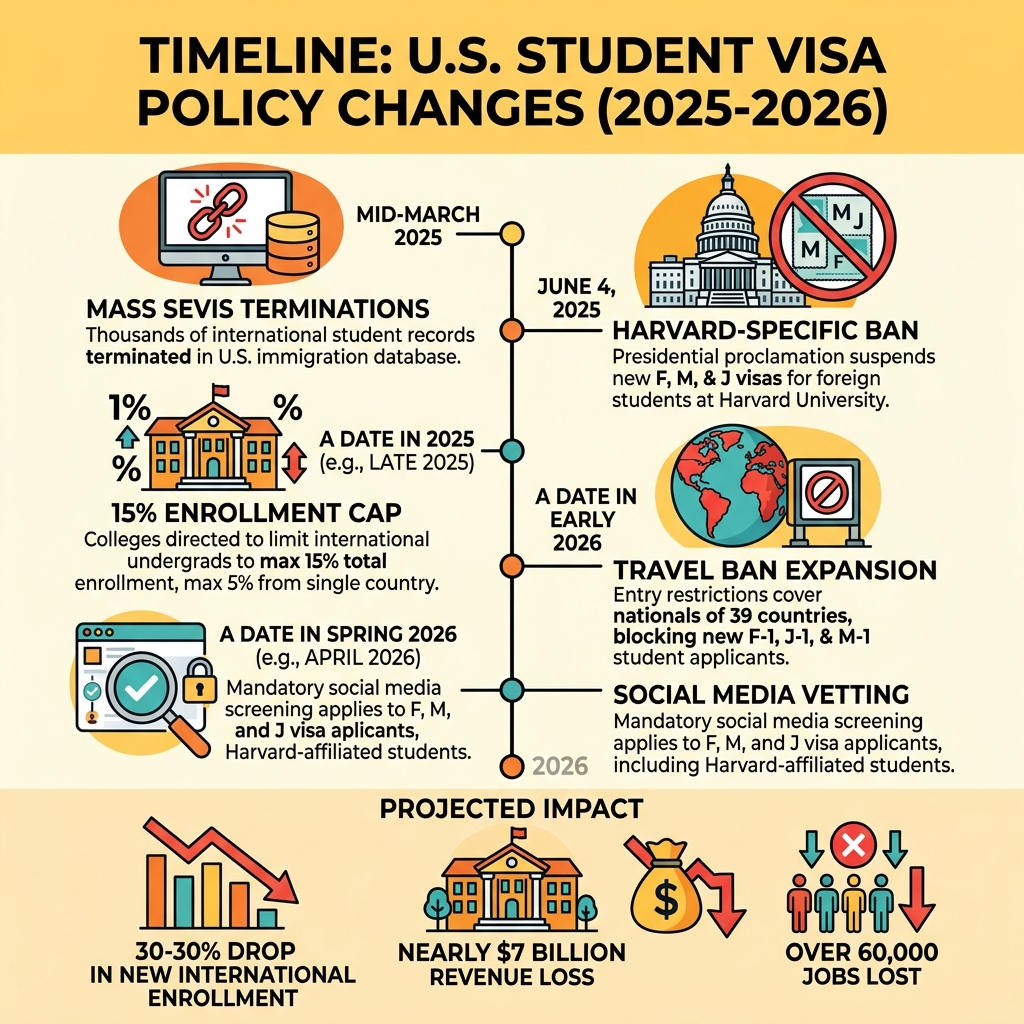
- Harvard-specific ban — President Trump signed a proclamation on June 4, 2025, suspending new F, M, and J visas for foreign students at Harvard University
- 15% enrollment cap — A Trump administration memo directs U.S. colleges to limit international undergraduates to no more than 15% of total enrollment, with no more than 5% from any single country
- Travel ban expansion — Entry restrictions now cover nationals of 39 countries, directly blocking new F-1, J-1, and M-1 student visa applicants outside the U.S.
- Mass SEVIS terminations — Thousands of international student records in the U.S. immigration database have been terminated since mid-March 2025
- Social media vetting — Mandatory screening now applies to F, M, and J visa applicants, including Harvard-affiliated students
These policies have hit international students hard — and fast. A projected 30–40% drop in new international enrollment this fall could cost U.S. higher education nearly $7 billion in revenue and more than 60,000 jobs.
If you are an international student planning to study in the U.S. — or already enrolled — understanding exactly which rules apply to you is critical right now.
The Harvard Proclamation: A Targeted Exclude USA Student Policy

On June 4, 2025, the landscape of American higher education shifted significantly when President Trump signed a targeted executive order that specifically singled out Harvard University. This move wasn’t just a general policy shift; it was a direct strike at one of the world’s most prestigious institutions, framed as a necessary measure for national security.
The administration cited deep-seated concerns over Harvard’s foreign ties, particularly its financial relationship with China. According to official reports, Harvard has received more than $150 million from China alone. The government’s argument is that these financial injections, coupled with research partnerships that may aid foreign militaries, make the university a security risk. There have even been allegations of the university hosting members of the Chinese Communist Party (CCP) paramilitary.
As a result, the State Department began implementing immediate social media screening for any visa applicant affiliated with the school. This doesn’t just apply to students; it covers faculty and researchers too.
Who is Affected by the Harvard Exclude USA Student Policy?
The scope of this exclude usa student policy at Harvard is broad yet specific. It primarily suspends the entry of any foreign national seeking a new F (academic), M (vocational), or J (exchange) visa to attend Harvard.
But it doesn’t stop at new arrivals. The proclamation also directs the Secretary of State to consider revoking the existing visas of students currently enrolled if they meet certain criteria related to national security risks. While there are “national interest” exemptions, these are granted on a case-by-case basis and are expected to be rare. For many, this has turned a dream education into a legal nightmare.
Security Concerns and Foreign Ties at Harvard
Why Harvard? The administration believes the university has been “untrustworthy” in its dealings with foreign entities. The concerns range from research partnerships that allegedly benefit China’s military to the university being slow in providing lists of foreign students to federal authorities.
The government has even pointed to high-profile examples, such as Xi Jinping’s daughter attending Harvard in the past, to illustrate what they call a “party school” for foreign bureaucrats. This policy aims for “accountability,” suggesting that until the university severs certain ties, its ability to host international talent will face revocation of its federal certification for student programs.
Broader Restrictions: Enrollment Caps and Travel Bans
While Harvard is the most prominent target, the exclude usa student policy extends far beyond Cambridge, Massachusetts. In a move that has sent shockwaves through admissions offices nationwide, a Trump memo sets 15% cap on international students at US colleges.
Under this directive, universities are told to cap their international undergraduate enrollment at 15% of the total student body. Furthermore, no more than 5% of students can come from any single country. For schools like Brown, Columbia, and MIT, which often have high international populations, this could force a massive restructuring of their student bodies. Schools that fail to comply risk losing access to vital federal funding.
| Restriction Level | Number of Countries | Key Affected Nationalities |
|---|---|---|
| Full Suspension | 19 | Afghanistan, Iran, Somalia, Yemen, Libya, Myanmar, etc. |
| Partial Suspension | 19 | Nigeria, Venezuela, Cuba, etc. |
| Total Impacted | 38 + Palestinian Territory | Students from these regions face extreme visa hurdles. |
Navigating the Exclude USA Student Policy for 39 Countries
Effective January 1, 2026, the administration expanded its travel ban to include a total of 39 countries and the Palestinian territory. This is a blanket visa ban for nationals of 39 countries, specifically targeting new F-1, J-1, and M-1 applicants.
Nigeria, which is one of the top 10 sources of international students in the U.S., is among the most heavily impacted. We’ve seen search interest for U.S. study in Nigeria drop by over 50% as students look toward more welcoming shores. If you’re from one of these regions, it’s easy to feel discouraged, but it’s important to remember Don’t Get Schooled by the 5-Star Student Policies and stay informed on your legal rights.
SEVIS Terminations and Status Maintenance
Since mid-March 2025, thousands of SEVIS (Student and Exchange Visitor Information System) records have been terminated. This is often done with little warning, leaving students “out of status” and vulnerable to deportation.
An internal ICE memo from May 2025 indicated an expansion of authority to terminate these records more aggressively. For students, maintaining status has never been more complicated. It’s not just about grades anymore; it’s about compliance with every minute detail of the law. And remember, if you have to leave campus for any reason, you should know How to Use Your Student Health Plan When You Wander Off Campus to ensure you remain covered during these turbulent times.
Economic Impact and Legal Challenges
The numbers are staggering. Estimates suggest that the current trajectory of the exclude usa student policy could lead to a $7 billion loss in revenue for the U.S. economy. International students aren’t just scholars; they are economic engines that support over 60,000 jobs nationwide.
In response, the Presidents’ Alliance and other advocacy groups have filed numerous lawsuits. They argue that these mass terminations and visa revocations violate due process and constitutional protections. The legal battle is ongoing, with over a hundred lawsuits currently making their way through the court system. For students caught in the middle, having The Ultimate Guide to Insurance for Students Studying Overseas is a small but necessary bit of security in an otherwise uncertain environment.
Essential Advice for International Students and Scholars
If you are currently in the U.S. or planning to come, we recommend a “safety first” approach. The government has issued new guidance that emphasizes strict vetting.
- Social Media Privacy: Be aware that your digital footprint is now part of your visa application. Many students are choosing to make their accounts public to facilitate vetting, while others are scrubbing sensitive content.
- Travel Precautions: If you are from an affected country, avoid traveling outside the U.S. unless absolutely necessary. Re-entry is not guaranteed, even with a valid visa.
- Backup Plans: Many students are now looking at Canada, the UK, or Germany as alternatives. These countries often have more predictable immigration pathways.
- Local Logistics: Even simple things like Student Car Insurance That Costs Less Than Your Textbooks can be a stressor when your visa status is in question. Keep your local affairs in order to avoid any legal “strikes” that could trigger a revocation.
Frequently Asked Questions about Student Exclusion Policies
Can current Harvard students have their visas revoked?
Yes. The proclamation specifically directs the Secretary of State to review and consider revoking existing visas for Harvard students who meet certain risk criteria. According to the 9 FAM 403.11 (U) NIV REVOCATION guidelines, while notification and a chance for rebuttal are usually required, the government has broad “prudential” authority to cancel visas if they believe the holder is ineligible or a threat.
What are the exemptions to the 2026 travel ban?
According to the Presidential Proclamation: Expanding U.S. Entry Restrictions – ISS, the ban primarily affects those outside the U.S. without a valid visa as of the effective date. Exemptions generally include:
- U.S. Lawful Permanent Residents (Green Card holders).
- Dual nationals traveling on a passport from a non-restricted country.
- Individuals with valid visas issued before the ban took effect.
- Refugees and certain diplomats.
How does the H-1B lottery change affect students?
The DHS published a final rule that fundamentally changes the H-1B lottery. Instead of a random draw, the system will now prioritize applicants with the highest salaries. This heavily disadvantages recent graduates who are usually in entry-level positions. Additionally, a new $100,000 fee for certain H-1B petitions filed from outside the U.S. adds another massive financial barrier for international talent.
Conclusion
The exclude usa student policy represents one of the most challenging eras for international education in U.S. history. From the targeted restrictions at Harvard to the broad enrollment caps and travel bans, the hurdles are high. At ACT Unis, we believe that education should be accessible, and we remain committed to helping students navigate these complex regulatory waters.
While the future outlook remains uncertain, staying informed and having backup plans is your best defense. We will continue to monitor enrollment trends and policy shifts to provide you with the most up-to-date guidance. For more resources and support, visit us at https://www.actutunis.com/.