
Don’t Get Schooled by Medical Bills with Travel Insurance USA Student Coverage
Why Medical Bills Can Derail Your US Study Dream
Travel insurance USA student plans are the financial safety net every international student needs before setting foot on American soil. US healthcare is among the most expensive in the world — a single emergency room visit can cost thousands of dollars out of pocket.
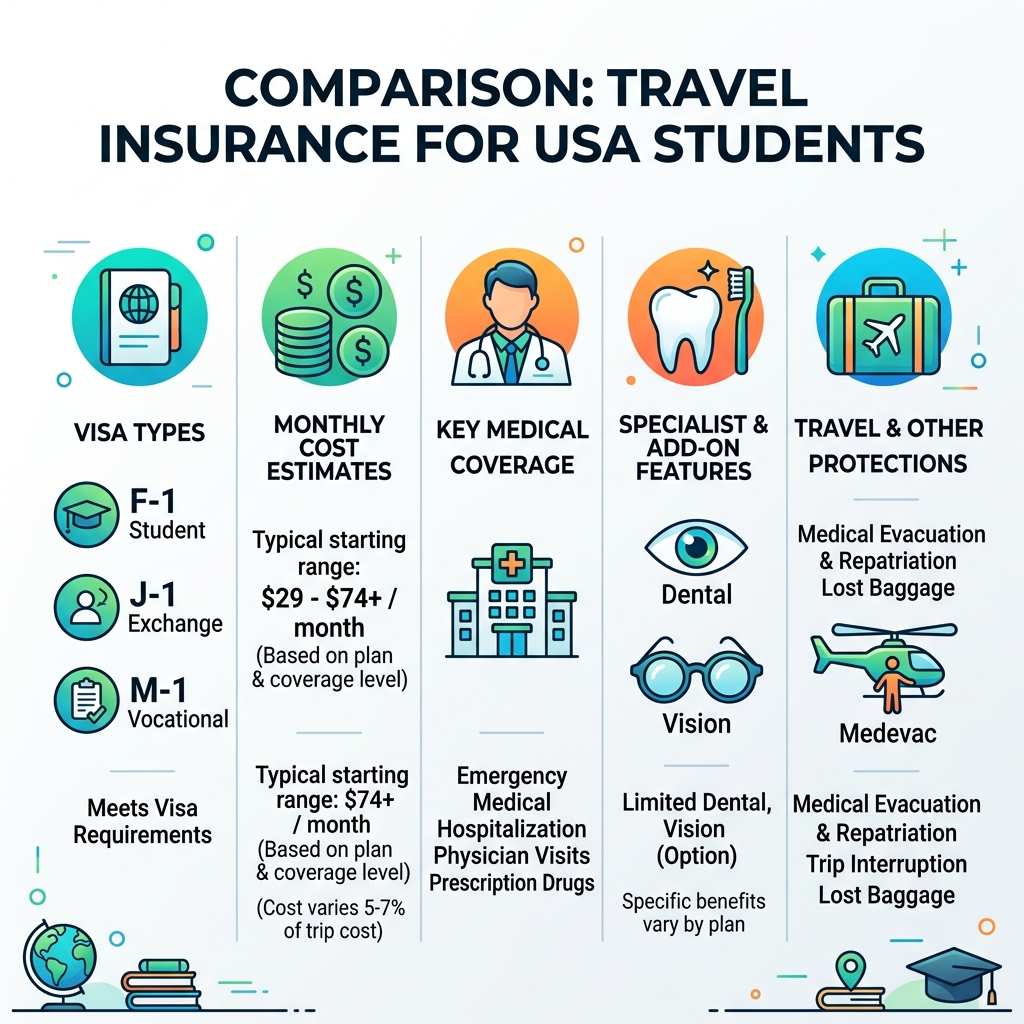
Most student insurance plans cost between 5% and 7% of your total trip cost. Monthly plans typically start at $29–$74/month depending on coverage level. These plans are designed to meet the specific needs of F-1, J-1, M-1, and OPT students, ensuring both medical protection and visa compliance.
Unlike in many other countries, the US has no public healthcare system. That means if you get sick or injured without coverage, you pay the full bill yourself. Most US-based health insurance plans also won’t cover you if you travel outside the country.
Beyond the cost risk, many US student visas — including F-1, J-1, and M-1 — either require or strongly recommend proof of health insurance. Getting caught without it can put your visa status at risk.
The good news? The right plan doesn’t have to break your budget. There are solid options starting under $30/month that meet visa requirements and cover the essentials.
Why You Need Travel Insurance USA Student Coverage
When we talk about studying in the United States, we often focus on the excitement of campus life and the prestige of the degree. However, the reality of the American healthcare system is something every student must face. Unlike nationalized systems where taxes cover medical care, the US operates on a “pay-as-you-go” or private insurance model. Without travel insurance USA student coverage, a simple sports injury or a bout of the flu could lead to a bill that costs more than a semester’s tuition.

Beyond the sheer cost, there is the matter of visa compliance. The US government and individual universities have strict mandates. If your insurance doesn’t meet their specific criteria, you might not be allowed to register for classes. This is where we see the value of specialized plans; they are designed specifically to tick all the boxes required by the Department of State and university registrars.
For a deeper dive into how these systems work globally, check out The Ultimate Guide to Insurance for Students Studying Overseas. Peace of mind is the ultimate goal—knowing that if the unthinkable happens, you have a team of experts ready to coordinate your care and handle the paperwork.
Essential Medical Benefits for Travel Insurance USA Student Plans
What exactly does a good plan look like? It’s not just about “emergency only” coverage. A comprehensive travel insurance USA student policy should include:
- Hospitalization and Outpatient Care: Coverage for room charges, surgery, and doctor visits.
- Emergency Dental: Most plans cover acute pain or injury to sound natural teeth (often up to $500), though routine cleanings are usually excluded.
- Mental Health: This is a critical requirement for many university waivers. Modern student plans often include outpatient mental health visits and crisis support.
- Telehealth: Access to 24/7 virtual doctor visits is a game-changer, allowing you to get a prescription or medical advice from your dorm room without sitting in a waiting room.
- Medical Evacuation and Repatriation: If a local facility can’t treat you, these benefits cover the high cost (sometimes $100,000+) of transporting you to a better hospital or back to your home country.
How to Choose the Best Travel Insurance USA Student Policy
Choosing a plan is about balancing your budget with your health needs. Here are the key factors we recommend evaluating:
- Deductibles: This is the amount you pay before the insurance kicks in. Lower deductibles (like $15 or $50) are great for peace of mind but usually mean higher monthly premiums.
- Provider Networks: Check if the plan uses a major PPO network. Using “in-network” doctors saves you significant money and often involves “direct billing,” meaning the hospital bills the insurance company directly instead of asking you for cash upfront.
- Coverage Limits: Look for “Policy Maximums.” While some budget plans cap at $200,000, “Platinum” or “Elite” tiers often offer $1,000,000 or even unlimited coverage.
- Duration: Ensure the plan covers your entire stay, including the weeks before classes start and the grace period after they end.
For more assistance navigating these terms, explore our student insurance categories.
Navigating US Visa Requirements for International Students
Navigating the alphabet soup of US visas—F-1, J-1, M-1—can be dizzying. Each has its own set of rules regarding health coverage.
- J-1 Visa Holders: The US Department of State mandates specific insurance levels. These include at least $100,000 in medical benefits per accident or illness, $25,000 for repatriation of remains, and $50,000 for medical evacuation. The deductible cannot exceed $500 per accident or illness.
- F-1 and M-1 Visa Holders: While the federal government is less strict, individual universities usually set the bar. Most schools require “comparable coverage” to their own expensive school-sponsored plans before they will grant you a “waiver.”
- OPT (Optional Practical Training): Even after graduation, you are still on an F-1 visa. Many employer-based plans have a 90-day waiting period. Specialized travel insurance USA student plans for OPT participants bridge this gap, ensuring you aren’t left vulnerable during your first job.
Coverage for Dependents and Family Members
If you are bringing a spouse or children (on F-2 or J-2 visas), they need protection too. Most major providers allow you to add dependents to your policy. However, keep in mind:
- Enrollment Rules: Usually, the primary student must be enrolled for the dependents to be eligible.
- Maternity Coverage: If you are planning to start a family, look for “Elite” or “Platinum” plans. These often have a waiting period (typically 10 months) before pregnancy is covered.
- Pediatric Care: Ensure the plan covers standard childhood illnesses and immunizations if required by local schools for your children.
Comparing Costs: What to Expect for Student Coverage
Budgeting is a huge part of the student experience. Fortunately, travel insurance USA student options are tiered to fit different wallets. Based on industry averages, here is what you can expect:
| Plan Tier | Approx. Monthly Rate | Max Coverage | Best For |
|---|---|---|---|
| Lite | $29 – $30 | $400,000 | Budget-conscious students meeting basic school requirements. |
| Plus | $48 – $56 | Unlimited / $1M | Students wanting higher limits and better mental health benefits. |
| Platinum | $74 – $149 | Unlimited | Maximum protection, including higher maternity and sports limits. |
While the average cost is 5-7% of your trip, many students find that monthly premiums are more manageable. For example, a “Smart” or “Basic” plan might start at just under $1 a day if you exclude certain coverages or choose a higher deductible.
Private Insurance vs. University-Sponsored Health Plans
Every semester, your university will likely bill you for their “Student Health Plan.” These plans are convenient but can be incredibly expensive—sometimes costing $2,000 to $4,000 per year.
Why consider private insurance instead?
- Cost-Effectiveness: Private plans can be 30-50% cheaper while providing the same (or better) coverage levels.
- Flexibility: University plans often only cover you while you are on campus or in that specific state. Private travel insurance USA student plans often cover you during summer break, trips to other US states, and even short visits back to your home country.
- Waiver Eligibility: As long as the private plan meets the school’s “Waiver Criteria” (which usually includes things like ACA compliance, mental health coverage, and a US-based claims office), you can opt out of the school plan and save that money for textbooks or travel.
To see more about how to manage your life as an international scholar, browse our student-specific resources.
How to File a Claim and Access 24/7 Assistance
When you’re thousands of miles from home, the last thing you want to do is fight with a claims department. Modern travel insurance USA student providers have moved almost everything to mobile apps.
The typical claims process:
- Seek Care: If it’s an emergency, call 911. For non-emergencies, use the app to find an “In-Network” doctor.
- Show Your ID Card: You can usually download a digital ID card to your phone’s wallet. This tells the doctor where to send the bill.
- File Digitally: If you had to pay for a prescription or a small co-pay, take a photo of the receipt and upload it via the provider’s portal. Many modern companies process claims in as little as 48 hours.
- 24/7 Support: Most plans include a “Concierge” or “Assistance” line. They can help with everything from finding a multilingual doctor to replacing a lost passport or arranging a medical evacuation.
Frequently Asked Questions about Student Travel Insurance
What is typically excluded from student travel insurance?
While these plans are robust, they aren’t “cover-all” policies. Common exclusions include:
- Pre-existing Conditions: Many budget plans have a “look-back” period (often 6-12 months). If you were treated for a condition during that time, it might not be covered immediately unless you buy a “Platinum” level plan with a waiver.
- Adventure Sports: Activities like skydiving, bungee jumping, or professional athletics usually require an extra “rider” or a higher-tier plan.
- Alcohol and Drugs: If an injury occurs while you are intoxicated or under the influence of illegal substances, the claim will likely be denied.
- High-Risk Zones: Travel to countries with a “Level 4” US State Department advisory is often excluded.
How much does student travel insurance typically cost?
As mentioned, expect to pay between $30 and $75 per month for a standard plan. Factors that increase the price include older age (25+), choosing a $0 deductible, and including coverage for the USA (which is more expensive than “World excluding USA” plans). For those looking to save money in other areas of student life, check out our guide on Student Car Insurance That Costs Less Than Your Textbooks.
Can I keep my insurance while on OPT or STEM OPT?
Yes! This is a common concern for graduating students. As long as you maintain your F-1 status and are actively participating in your OPT or STEM OPT period, you can usually renew your student insurance. This is often much cheaper than buying an individual “Expat” or “Marketplace” plan while you are job hunting or in a training program.
Conclusion
Studying in the USA is a monumental achievement, but the high cost of American healthcare means you shouldn’t leave home without a plan. By securing the right travel insurance USA student coverage, you aren’t just buying a piece of paper for your visa—you’re protecting your financial future and your health.
At ACT Unis, we believe that every student deserves to focus on their grades and their growth, not their medical bills. Whether you are an F-1 student looking for a university waiver or a J-1 scholar needing to meet Department of State mandates, there is an affordable, high-quality plan waiting for you.
Visit ACT Unis for comprehensive student insurance guides to find the perfect coverage for your American adventure. Stay safe, study hard, and travel with confidence!