
Choosing the Right Medical Aid Plans for Students
Why Choosing the Right Medical Aid Plans for Students Matters
Medical aid plans for students are health insurance options designed specifically for people in higher education – and picking the right one can save you serious money while keeping you covered when it counts.
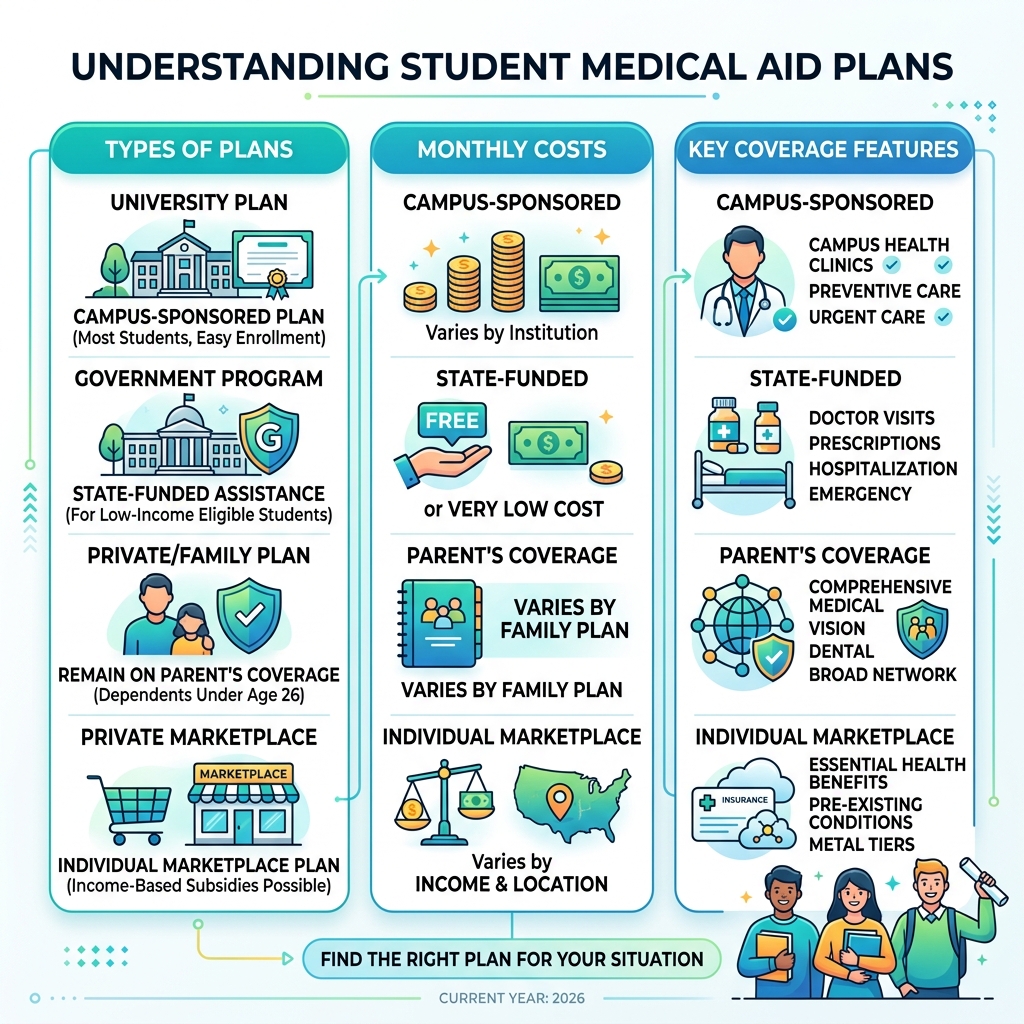
Here are the main student medical aid options available:
| Plan Type | Best For | Estimated Monthly Cost |
|---|---|---|
| University/college health plan | Most students, easy enrollment | Varies by school |
| International Student Option | Foreign students studying locally | From R625/month |
| Budget Network Plan | Budget-conscious students | From R541/month |
| Comprehensive Day-to-Day Plan | Students wanting routine cover | From R804/month |
| Parent’s plan (under 26) | Dependents with family coverage | Varies |
| Marketplace/Exchange plan | US students without school plans | Varies by income |
| Medicaid | Low-income US students | Free or low cost |
The stakes are real. As many as 3 million students in the US alone are enrolled in school-sponsored health plans. Yet many students either skip coverage entirely or stay on a plan that doesn’t actually work for their situation.
Being a student usually means a tight budget. But going without health cover is a risk that can cost far more than the monthly premium – a single emergency visit or hospital stay can wipe out an entire semester’s savings.
The good news? Student-specific plans exist precisely because you’re young, generally healthy, and need affordable, practical cover – not the same expensive plan designed for a family of four.
This guide breaks down your options clearly, so you can find the plan that fits your life and your wallet.
Medical aid plans for students helpful reading:
Understanding Medical Aid Plans for Students

When we talk about medical aid plans for students, we are referring to health insurance products specifically designed for the unique lifestyle and budget of someone in higher education. These plans are generally available to individuals enrolled in a recognized college, university, or technical institution.
Eligibility and Age Limitations
In the United States, the Affordable Care Act (ACA) changed the game by allowing young adults to stay on their parents’ health insurance plans until the age of 26. However, if you are over 26 or if your parents’ plan doesn’t provide adequate coverage in the state where you are studying, you’ll need to look at individual options.
Many school-sponsored plans have specific eligibility requirements, such as being enrolled in a minimum number of credit hours. If you drop below “half-time” status, you might lose your eligibility for the student health plan.
Enrollment Periods
Timing is everything. Most students enroll during the “Open Enrollment” period at the start of the academic year. If you miss this window, you might only be able to join if you experience a “Qualifying Life Event,” such as losing other coverage or moving to a new state.
Individual Health Insurance and ACA Protections
It is important to know that many modern student plans now offer the same ACA protections as standard marketplace plans. This means they cannot deny you coverage for pre-existing conditions and must cover essential health benefits like emergency services, maternity care, and mental health support.
Key Benefits of Student-Specific Coverage
Why choose a plan specifically labeled for students instead of a general marketplace plan? The answer usually comes down to three things: convenience, cost, and campus integration.
- Lower Premiums: Because students are generally younger and healthier than the average population, insurance providers can offer lower monthly rates.
- Tailored Benefits: These plans focus on what students actually need—like sports injury coverage, mental health support for academic stress, and easy access to campus-based clinics.
- Campus Clinic Access: Many university plans are designed to work seamlessly with the on-campus health center, often resulting in $0 copays for basic check-ups.
- Virtual Doctor Visits: In a post-pandemic world, many student plans include 24/7 telehealth services, allowing you to speak to a doctor from your dorm room at 2:00 AM.
If you find yourself traveling during breaks, you’ll want to learn How to Use Your Student Health Plan When You Wander Off Campus to avoid unexpected out-of-network charges.
Comparing Costs and Network Access for Medical Aid Plans for Students
Understanding the financial jargon is the first step toward not getting “schooled” by your policy. Here is a breakdown of what you should compare:
| Term | What it Means for Students |
|---|---|
| Premium | The monthly (or semesterly) fee you pay just to have the insurance. |
| Deductible | The amount you pay out-of-pocket for covered services before the insurance starts to pay. |
| Copay | A flat fee you pay for a specific service (e.g., R135 for a GP visit). |
| Out-of-Pocket Max | The absolute most you will pay in a year. After this, the plan pays 100%. |
In South Africa, many medical aid plans for students use “Designated Service Providers” (DSPs). For example, many network-based options offer different price points based on whether you choose to use any private hospital, a specific network of hospitals, or state facilities for your Prescribed Minimum Benefits (PMBs). Choosing a restricted network can significantly lower your monthly contribution—sometimes as low as R541 per month.
Before you sign on the dotted line, make sure you Don’t Get Schooled by the 5-Star Student Policies that might have high deductibles hidden behind low premiums.
Essential Coverage: From Emergencies to Mental Health
A good student plan should be a safety net for both the small stuff and the big “oh no” moments.
Hospital Stays and Emergencies
Trauma and emergency medical cover are the “must-haves.” Comprehensive student medical plans provide a network of quality private hospitals to ensure that if you are in an accident, you aren’t stuck with a bill that rivals your tuition.
Mental Health Support
College is stressful. We believe mental health is just as important as physical health. Most modern plans provide access to counseling and crisis support. In the US, you can always access the 988 Suicide & Crisis Lifeline for immediate help. Many insurers also provide links to Substance Abuse and Mental Health Services Administration (SAMHSA) for long-term recovery resources.
Chronic Condition Management
If you have a condition like asthma or diabetes, you need a plan that covers “Prescribed Minimum Benefits” (PMBs) or “Chronic Disease List” (CDL) conditions. In South Africa, schemes are legally required to cover the diagnosis, treatment, and medication for 271 medical conditions and 26 chronic illnesses, regardless of which plan you choose.
Dental and Optical
While many student plans focus on hospital cover, some offer “Flexi-Benefits” or specific limits for day-to-day care. For instance, you might get a basic dental check-up once a year or a contribution toward new glasses every 24 months.
Navigating Medical Aid Plans for Students as an International Scholar
If you are traveling across borders to study, your health insurance needs change. Most countries, including South Africa and the US, require international students to have specific medical cover to obtain a study visa.
- Visa Requirements: In South Africa, you generally cannot register at a university without proof of medical aid from a locally registered scheme.
- Medical Evacuation: If you are studying in a remote area, you want a plan that includes “repatriation” or emergency evacuation to a major medical hub or your home country.
- Multilingual Support: Some providers offer brochures and support in English, Portuguese, and French to help international scholars feel at home.
For those heading abroad, we recommend checking out The Ultimate Guide to Insurance for Students Studying Overseas to ensure your paperwork is in order before you land.
How to Enroll or Waive Your University Health Plan
Most universities operate on a “hard waiver” system. This means they automatically enroll you in the school’s health plan and add the cost to your tuition bill unless you proactively “waive” it.
The Waiver Process
To waive the school plan, you must provide proof that you have “comparable coverage”—meaning your current insurance (like your parents’ plan) meets the school’s minimum requirements for things like deductibles and local provider access.
Digital Management
Modern medical aid plans for students are built for the digital age. Most providers offer:
- Digital ID Cards: No more losing your plastic card; just show the app on your phone.
- Member Log-ins: Check your claims status, track how close you are to your deductible, and find nearby doctors through a dedicated portal.
Learning how to navigate these systems is key to How to Not Go Broke Studying Abroad with Overseas Medical Insurance.
Frequently Asked Questions about Student Health
Can I stay on my parents’ medical aid while studying?
Yes, in many cases. In the US, you can stay on a parent’s plan until age 26. In South Africa, you can often remain a dependent if you are a full-time student, though the “adult dependent” rate may apply. The biggest risk is “out-of-area” coverage; if your parents’ plan only uses doctors in a different province or state, it might be useless for day-to-day care at school.
What happens if I have a pre-existing chronic condition?
Under ACA-compliant plans and South African medical schemes, you cannot be denied coverage for pre-existing conditions. However, schemes may impose a “waiting period” (usually 3 to 12 months) during which they won’t pay for claims related to that specific condition. Once that period is over, you get full access to chronic medication and specialist visits.
Are dental and optical benefits included in student plans?
It depends on the plan. Basic network plans often include one dental consultation and one eye test per year at specific network providers. More comprehensive plans might offer a “Flexi-Benefit”—a pot of money you can choose to spend on either a dentist, an optometrist, or a specialist.
Conclusion
Choosing between the various medical aid plans for students shouldn’t feel like taking a final exam you didn’t study for. Whether you are a local student looking for the cheapest hospital cover or an international scholar needing visa-compliant insurance, the right plan is out there.
At ACT Unis, we want you to focus on your grades, not your medical bills. Securing the right health management plan provides the financial protection and peace of mind you need to succeed academically.
Ready to secure your future? Access more student insurance resources today and find the coverage that makes the grade.