How to Not Go Broke Studying Abroad with Overseas Medical Insurance
The Real Cost of Studying Abroad Without Health Insurance
Overseas medical insurance for students is specialized health coverage that protects you from potentially devastating medical bills while studying in another country.
Quick answer: What does it cover?
| Coverage Type | What It Means for You |
|---|---|
| Emergency medical care | Hospital stays, doctor visits, surgery abroad |
| Medical evacuation | Transport to a proper facility (can cost $100,000+) |
| Repatriation | Return of remains to your home country |
| Mental health | Counseling and crisis support |
| Telehealth | Virtual doctor visits from your dorm |
| Prescription drugs | Medications prescribed during your stay |
Studying abroad is one of the most exciting things you can do in your twenties. New country. New culture. New perspective.
But here is the part nobody puts in the brochure: one unexpected trip to the emergency room can wipe out your entire semester’s budget.
In countries like the United States or Switzerland, healthcare is expensive even for locals. For international students on temporary visas, public healthcare is often completely off the table. You pay out of pocket — or you don’t get treated.
A medical evacuation alone can cost $100,000 or more. A hospital stay for something as common as pneumonia can run into tens of thousands of dollars. Without the right coverage, a single health emergency can turn your study abroad dream into a financial nightmare.
The good news? The right overseas student health plan can cost as little as $30–$39 per month — far less than one night in a foreign emergency room.
Why Overseas Medical Insurance for Students is a Non-Negotiable

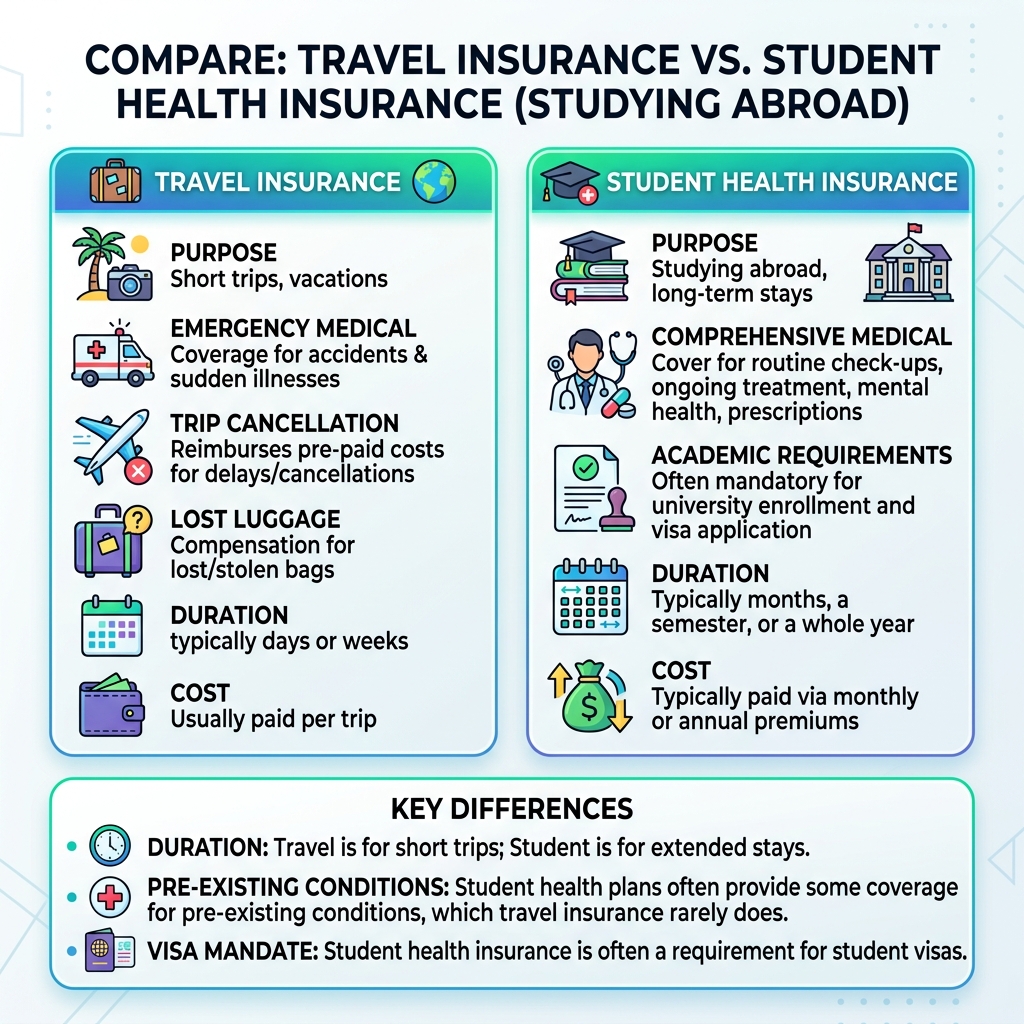
When you are packing your bags for a semester in Spain or a degree in the U.S., insurance might feel like just another line item on a long to-do list. However, The Ultimate Guide to Insurance for Students Studying Overseas makes it clear: this is your primary financial safety net.
Medical cost inflation is a global reality. In many popular study destinations, international students are specifically excluded from public healthcare systems. Even in countries with “free” healthcare, those benefits are usually reserved for tax-paying residents or citizens. As a student on a temporary visa, you are often viewed as a private patient, meaning you’ll be handed the full bill for every cotton swab and consultation.
Without overseas medical insurance for students, you are essentially self-insuring against a world of risks. This doesn’t just mean big accidents; it includes routine illnesses like the flu or a sinus infection that requires a prescription. If you want to dive deeper into how different policies work, you can explore more in our insurance categories section.
Understanding Visa Requirements (F1, J1, OPT)
For many, insurance isn’t just a good idea—it’s the law. If you are heading to the United States, your visa type dictates exactly what kind of coverage you must have.
- J1 Visa Holders: The U.S. Department of State has very strict mandates for J1 scholars and their J2 dependents. Your policy must provide at least $100,000 in medical benefits per accident or illness, $50,000 for medical evacuation, and $25,000 for repatriation of remains. Furthermore, your deductible cannot exceed $500.
- F1 Visa Holders: While the U.S. government doesn’t set a specific dollar amount for F1 students, almost every university does. If your plan doesn’t meet their specific compliance checklist, they can place a hold on your registration.
- OPT Status: Many students forget that once they graduate and move onto Optional Practical Training (OPT), they still need coverage. Dedicated OPT plans often start around $39/month and ensure you remain compliant while bridging the gap to employer-sponsored insurance.
- Schengen Visa Rules: If you are studying in Europe within the Schengen Area, you generally need proof of insurance with a minimum coverage of €30,000 that includes emergency medical expenses and repatriation.
Navigating University Waivers and Private Plans
Most universities will automatically enroll you in their own “school-sponsored” health plan. While convenient, these plans are often significantly more expensive than private options. We have seen students save thousands of dollars by choosing a private plan and “waiving” the school’s insurance.
However, you must be careful. To successfully waive the school plan, your private overseas medical insurance for students must provide “comparable coverage.” This means it needs to match the school’s requirements for deductibles, policy maximums, and mental health benefits. Don’t Get Schooled by the 5-Star Student Policies is a great resource to help you understand how to compare these plans without getting overwhelmed by the fine print.
Essential Benefits: What Your Policy Must Cover
A “budget” plan that doesn’t cover what you actually need is just a waste of money. When comparing overseas medical insurance for students, look for these core pillars of protection:
- Inpatient and Outpatient Treatment: This covers everything from a night in a hospital bed to a quick visit to a local clinic.
- Prescription Drugs: Medications can be surprisingly expensive abroad. Ensure your plan covers drugs prescribed for new illnesses.
- Emergency Room and Urgent Care: Essential for those middle-of-the-night scares.
- 24/7 Assistance: You need a multilingual team you can call at 3 AM who can help you find a doctor or coordinate with a hospital.
In the event of a severe emotional crisis, resources like the Suicide & Crisis Lifeline are vital, but your insurance should also provide professional mental health support as part of your standard benefits.
Mental Health and Telehealth Support
The transition to living in a new country is stressful. Cultural shock, academic pressure, and loneliness are real challenges. Modern student policies now prioritize mental health, offering counseling services and crisis intervention.
Telemedicine is another game-changer. Instead of navigating a foreign bus system to find a clinic while you have a fever, many plans offer virtual visits. You can speak to a doctor in your native language from the comfort of your dorm. Knowing How to Use Your Student Health Plan When You Wander Off Campus ensures you get the most out of these digital perks, even during weekend trips to neighboring cities.
Medical Evacuation and Repatriation
This is the “big ticket” item. If you are studying in a remote area or a country where the local hospitals cannot provide the specialized care you need, medical evacuation is necessary. This involves “bed-to-bed” service—transporting you via private air ambulance with medical escorts to the nearest qualified facility.
Without insurance, this cost (averaging $100,000+) falls entirely on your family. Repatriation of remains is equally critical, covering the logistical and financial burden of returning a student to their home country in the event of a tragedy.
Comparing Costs and Choosing the Right Overseas Medical Insurance for Students
How much should you actually be paying? Generally, travel insurance for shorter trips costs between 5% and 7% of the total trip cost. For long-term students, premiums are usually billed monthly.
| Plan Tier | Typical Monthly Cost | Best For |
|---|---|---|
| Lite | $29 – $35 | Budget-conscious students, basic visa compliance |
| Plus | $45 – $60 | Most F1 students, balanced deductibles, higher limits |
| Platinum | $70+ | Students wanting “zero-worry” coverage, lowest deductibles |
Pricing is typically influenced by your age (rates often jump at age 25), your destination (the U.S. is almost always the most expensive), and the duration of your stay. For more tailored advice, check our students category.
Navigating the Claims Process for Overseas Medical Insurance for Students
The last thing you want to do while sick is deal with paperwork. Modern providers use mobile apps to simplify the process.
- Direct Billing: Many plans have a network of providers. If you stay “in-network,” the doctor bills the insurance company directly, and you only pay your deductible or co-pay.
- Itemized Billing: If you go out-of-network, you’ll likely pay upfront. Always get an itemized bill that shows every service provided and the amount paid.
- EOB (Explanation of Benefits): This is a document the insurance company sends after a claim is processed. It isn’t a bill; it’s a report showing what they paid and what (if anything) you owe.
Factors Influencing Your Premium
While age and destination are the big ones, your choices regarding deductibles and coinsurance also matter.
- Deductible: The amount you pay before the insurance kicks in. A higher deductible usually means a lower monthly premium.
- Coinsurance: The percentage of costs you share with the insurer (e.g., they pay 80%, you pay 20%) after the deductible is met.
Interestingly, while you’re looking at saving on health costs, don’t forget other expenses. You might find Student Car Insurance That Costs Less Than Your Textbooks if you plan on driving while abroad.
Avoiding Common Pitfalls and Exclusions
No insurance policy covers everything. Reading the exclusions list is just as important as reading the benefits. Common exclusions in overseas medical insurance for students include:
- High-Risk Adventure Sports: Skydiving, bungee jumping, and even some organized college sports might require a special “rider” or add-on.
- Alcohol and Drug-Related Incidents: If an injury occurs while you are intoxicated, many insurers will deny the claim.
- Level 4 Travel Advisories: If you travel to a country that the U.S. State Department has labeled with a Level 4 Travel Advisory, your coverage may be void.
Managing Pre-existing Conditions and Adventure Sports
If you have a chronic condition like asthma or diabetes, don’t assume it’s covered immediately. Many plans have a “waiting period” (often 6–12 months) before they cover pre-existing conditions. However, if you can provide “creditable coverage proof”—showing you were insured under another plan right before this one—some providers will waive that waiting period.
If you are an adrenaline junkie, look for plans that specifically mention adventure sports. Specialized student providers often offer packages that cover skydiving or scuba diving for an extra fee.
Frequently Asked Questions about Student Coverage
Can I waive my university’s health plan with a private policy?
Yes, in most cases. You must submit a waiver request to your university along with proof of your private insurance. As long as your plan meets their specific requirements (like a $0 deductible at the student health center or a specific policy maximum), they will usually remove the school’s insurance fee from your tuition bill.
Does student insurance cover me during my OPT period?
Many student-specific plans allow you to extend your coverage or purchase a dedicated OPT plan. This is often much cheaper than buying an individual plan on the open market and ensures you don’t have a gap in coverage while looking for a job.
What happens if I travel to multiple countries during my semester?
Most overseas medical insurance for students provides “worldwide coverage” (excluding your home country). This means if you are studying in France but take a weekend trip to Italy or a spring break trip to Morocco, you are still protected. Just check if your plan has “Zone” restrictions (e.g., Zone 1 might exclude the U.S. to keep costs down).
Conclusion
At ACT Unis, we believe that your time abroad should be spent exploring new horizons, not worrying about how you’ll pay for a doctor’s visit. Overseas medical insurance for students isn’t just a visa requirement; it’s the foundation of a stress-free academic journey.
Before you head to the airport, make sure you have:
- Verified your visa and university insurance requirements.
- Downloaded your insurance ID card and saved the 24/7 assistance number.
- Checked the “in-network” doctors near your campus.
Ready to secure your future? Start your journey with ACT Unis today and find a plan that fits your budget and your dreams. Safe travels!